
New accurate method for rapid elemental profiling using monochromatic X-ray fluorescence (MXRF) enables accurate analysis of plant samples as small as 1 mg.
Latest paper on rapid elemental profiling using monochromatic XRF
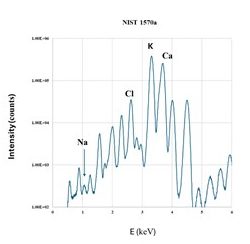
New accurate method for rapid elemental profiling using monochromatic X-ray fluorescence (MXRF) enables accurate analysis of plant samples as small as 1 mg.
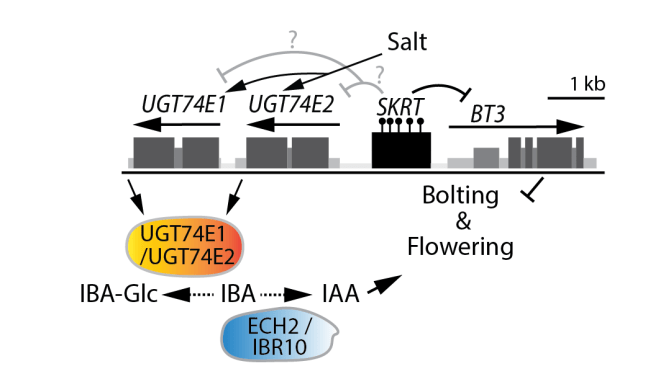
Plants face a multitude of environmental stresses, with salt stress being one of the most elusive. High soil salinity can alter plant development, including the floral transition—the shift from vegetative growth to flowering. However, the molecular mechanisms behind this process remain poorly understood. Our recent study is now available on bioRxiv and it sheds light on a novel regulatory pathway involving the SAUERKRAUT (SKRT) transposon and the adjacent genes: UGT74E1, UGT74E2 & BT3, and their role in controlling the floral transition under salt stress.
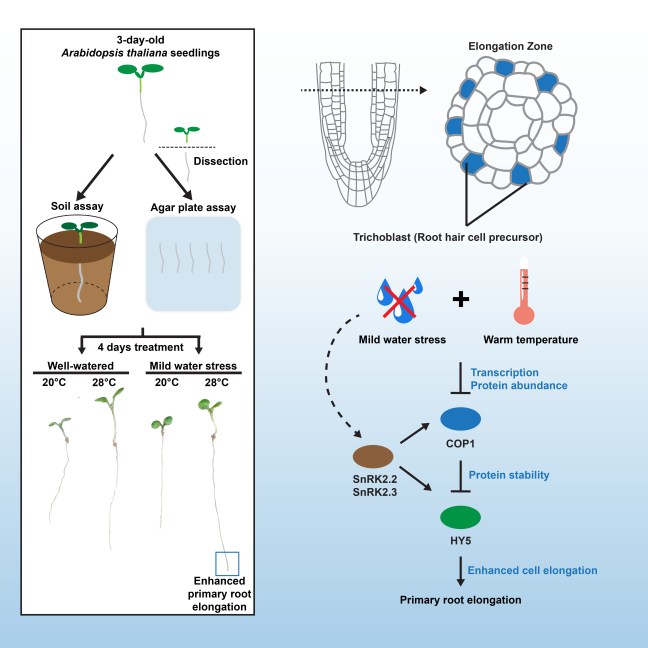
In the natural environment, plants are often exposed not just to single, but multiple stress stimuli. In our recently published work on warm temperature and mild water stress in Current Biology, we demonstrated how interaction of these two stresses orchestrate the root elongation response through the COP1-SnRk2s-HY5 pathway (Figure 1). Figure 1. Graphical abstract of … Continue reading “Partners in crime” – Warm temperature and mild water stress cooperatively promote root elongation

